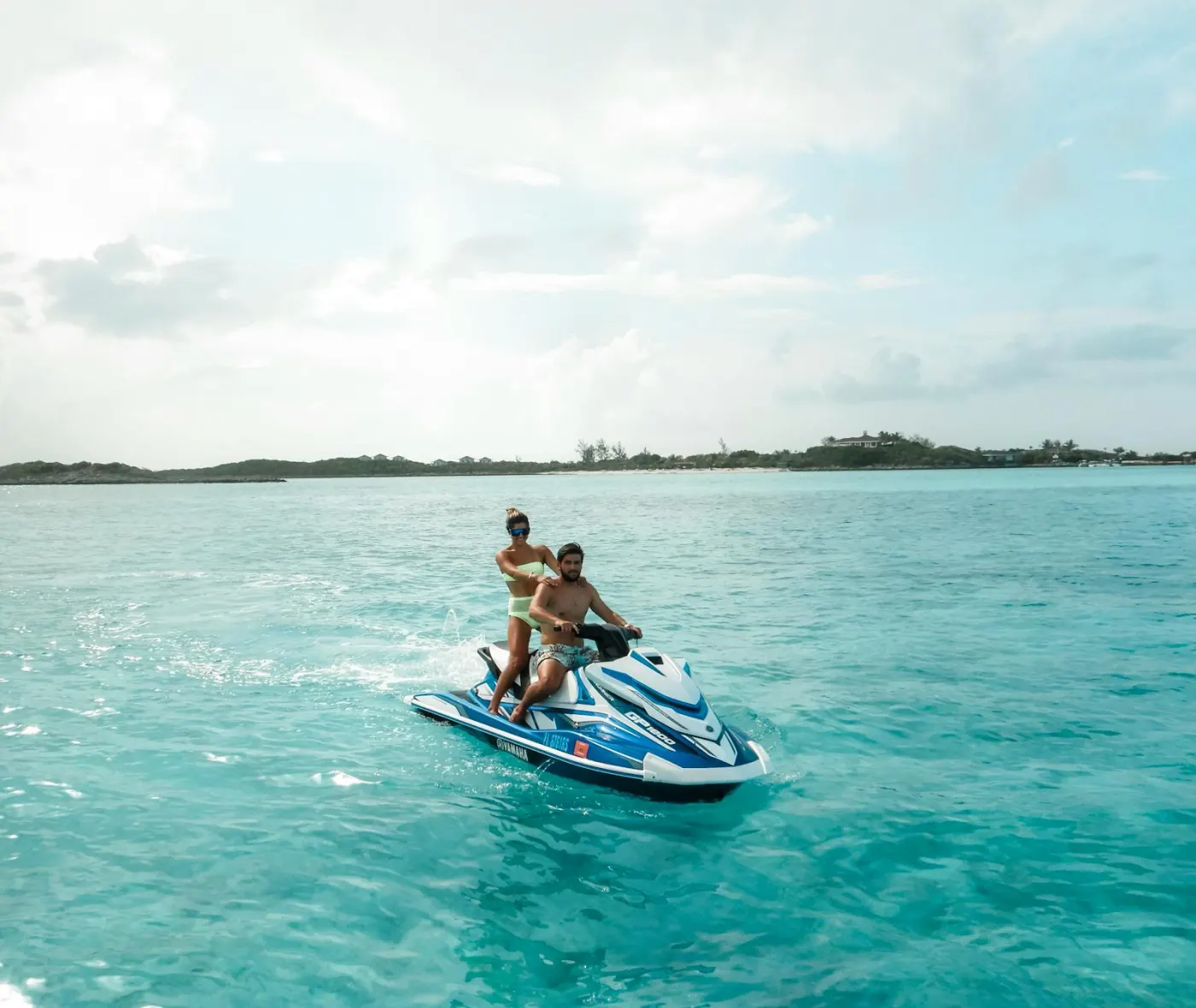
Never ridden a personal watercraft before? Here's everything we tell first-timers before they hit the water — what to wear, how the controls work, and why the first 5 minutes feel different from everything after.
Most first-timers arrive nervous. By the end of the safety briefing, they're excited. By the time they're 200 metres from the dock, they're grinning.
What you're actually getting on
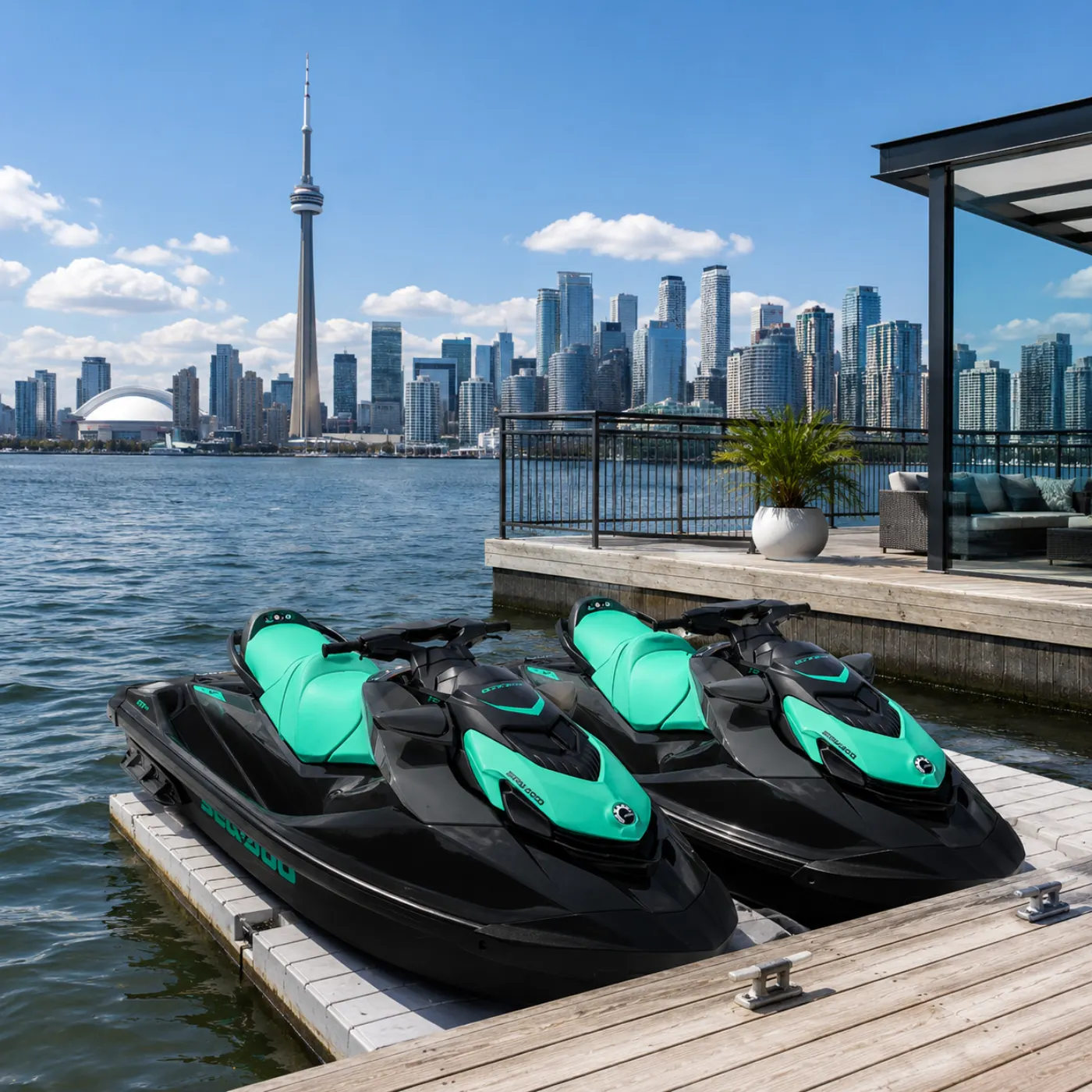
A modern jetski is 100–180+ horsepower, stable, and beginner-forgiving. Our fleet — two 2026 Sea-Doo GTI SE 170s — are trusted, well-maintained machines built for fun and safety on the water.
The safety briefing — actually pay attention
Our briefing takes 12 minutes. It covers throttle mechanics, what to do if you fall off, ride zone boundaries, and dock radio protocol. The most important thing to understand: releasing the throttle doesn't stop the machine quickly. It keeps moving. We explain this with a simple analogy and you'll have it immediately.
What to wear
- Swimsuit or board shorts — you will get wet
- No loose clothing — laces and drawstrings can tangle in the intake
- Sunscreen — water reflection doubles UV exposure
- Sunglasses with a retention strap
We provide Coast Guard-approved life jackets. You must wear one at all times.
The first five minutes
The first two minutes feel mechanical — you're thinking about throttle and steering simultaneously. By minute five, almost every rider has stopped thinking and started riding. That's the moment the day changes.
What happens if you fall off?
It happens. Don't panic. The engine automatically cuts when you separate from the machine. You'll be wearing a kill switch lanyard. Climb back on from the rear step, re-attach the lanyard, and restart. Our dock staff monitors the riding zone at all times.
Tips for a better ride
- Don't death-grip the handlebars — a relaxed grip gives better control
- Look where you want to go — the machine follows your eyes
- Slow down before turns — throttle out of them
- Keep 100 metres between yourself and other riders